
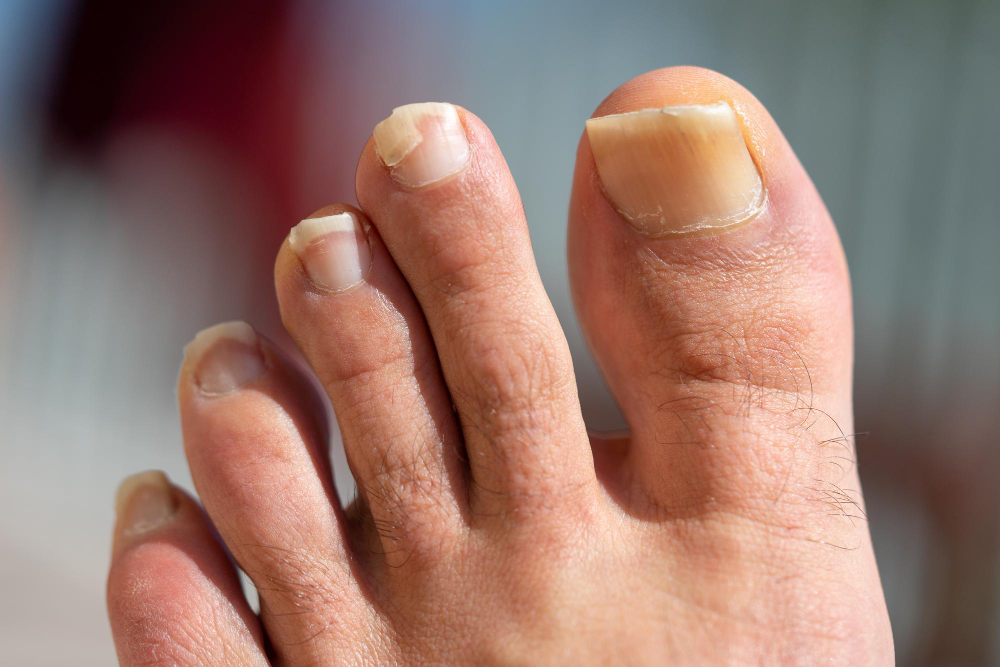
The Lacuna Method is a specialised clinical technique for treating fungal nail infections (onychomycosis). It involves creating a series of microscopic perforations in the nail plate, allowing an antifungal solution to penetrate directly to the nail bed, where the infection actively resides.
The Lacuna Method – Advanced Clinical Treatment for Fungal Nail Infections
Understanding the Lacuna Method
Traditional topical antifungal treatments often fail because the nail plate acts as a physical barrier, preventing the medication from reaching the source of infection beneath. The Lacuna Method overcomes this limitation by giving the antifungal agent a direct pathway to the infected tissue, dramatically improving its effectiveness.
How the Lacuna Method Works
Research now confirms that the active fungal infection lies primarily within the nail bed rather than the nail plate itself. Over-the-counter topical products typically remain on the surface, unable to pass through the dense keratin layers of the nail.
By carefully drilling a pattern of minute, precisely placed holes into the affected nail, the podiatrist allows the antifungal solution to reach the nail bed and target the fungal colony directly.
Once applied, the antifungal solution spreads naturally under the nail—helped by gentle pressure from footwear and normal walking—ensuring consistent distribution across the infected area.
Over time, this process halts the spread of the fungus and encourages the healthy nail to grow forward, gradually replacing the diseased portion. As toenails grow slowly, full regrowth can take up to 12–18 months, depending on the severity and nail growth rate.
Who Is Suitable for the Lacuna Method
The Lacuna Method is recommended for patients with mild to moderate fungal nail infections, where the infection has not extended beyond the cuticle. In these cases, the antifungal solution can still access the full extent of the infected nail bed.
Typical signs of fungal nail infection include:
Thickened or distorted nails
Discolouration (white, yellow, brown, or darkened appearance)
Brittleness or crumbling of the nail edge
Debris accumulation beneath the nail
White patches or streaks on the nail plate
Partial lifting or separation of the nail from the nail bed (onycholysis)
If the infection has reached the nail matrix (the area under the cuticle), alternative or adjunctive treatments may be more appropriate.
Clinical Procedure: What to Expect
Step 1 – Consultation and Assessment
A full podiatric assessment is carried out to confirm the presence and extent of fungal infection. This includes reviewing medical history, risk factors, and preventive advice to minimise reinfection.
Step 2 – Diagnostic Testing
In line with best clinical practice, we conduct a Dermatophyte Test Strip (DTS) to confirm the presence of dermatophyte fungi — the cause of approximately 90–95% of fungal nail infections. Results are available within five minutes.
Step 3 – Clinical Preparation
The affected nail is cleansed, debrided, and prepared for treatment.
Step 4 – Micro-Perforation
Using precision podiatric instruments, a series of micro-holes are drilled into the nail plate over the infected area. The sensation is typically mild — often described as similar to a hair being plucked.
Step 5 – Antifungal Application and Home Care Plan
An antifungal solution is applied directly to the nail surface, penetrating through the micro-holes to the nail bed. You’ll receive detailed home-care instructions on how to continue application between appointments to maintain treatment effectiveness.
Step 6 – Review and Follow-Up
A review appointment is usually scheduled 6–8 weeks later to monitor progress. Additional micro-holes may be created if needed, and treatment continues until healthy nail growth is observed.
If the infection proves resistant or unsuitable for the Lacuna Method, your podiatrist will discuss alternative options such as oral medication, topical therapies, or laser treatment.
Why Accurate Diagnosis Matters
Before beginning any fungal nail treatment, confirming the diagnosis is essential. Not all discoloured or thickened nails are fungal.
In fact, up to 50% of dystrophic nails are caused by other factors, including:
Previous trauma or injury to the nail or nail bed
Certain medical conditions (e.g. psoriasis, diabetes, thyroid disorders)
Medication side effects
Bacterial or yeast infections
Visual inspection alone is unreliable — even experienced clinicians achieve only about 67% accuracy by sight. Therefore, professional testing prevents misdiagnosis and ensures that patients receive appropriate, ethical, and effective treatment.
Diagnosis Options
GP Laboratory Testing:
Your GP can send a nail sample for laboratory culture. However, these tests often take several weeks and may return false-negative results due to insufficient sample material.Dermatophyte Test Strip (In-Clinic):
At our clinic, we use the DTS rapid test, which provides results in five minutes and is 97% accurate for dermatophyte detection.
Confirming the presence of fungal infection ensures that your treatment plan — whether Lacuna or otherwise — is both clinically justified and effective.
Is the Lacuna Method Right for You?
This treatment is ideal for individuals who:
Have discoloured, thickened, or brittle nails and want a targeted medical solution rather than routine trimming.
Prefer a minimally invasive, non-surgical approach to fungal nail care.
Want to address the root cause of infection, not just cosmetic symptoms.
Our podiatrists will always perform a thorough assessment and discuss your options transparently before proceeding with any treatment.
Aftercare and Results
You will be advised on an ongoing antifungal application routine at home to maintain treatment penetration between visits. Consistency is key — the infection clears only as fast as the nail grows out. With proper aftercare and footwear hygiene, most patients see visible improvement within several months.
Preventive advice is also provided, including:
Regular disinfection of socks, shoes, and nail clippers.
Avoiding barefoot walking in communal areas.
Maintaining good foot hygiene and nail trimming habits.
Booking and Cancellations
Please note:
Appointments not attended or cancelled with less than 24 hours’ notice without rescheduling will be charged in full, as appointment slots are reserved exclusively for you.
Book a Consultation
If you are struggling with discoloured, thickened, or fungal nails and would like a safe, clinical, and evidence-based solution, schedule your Lacuna Method Consultation today.
The FootCare Clinic – Dublin’s trusted podiatry and foot health specialists
🌐 www.FootCareClinic.ie | ☎️ 089 967 8596
Your journey to clear, healthy nails starts here — with professional diagnosis, medical-grade treatment, and lasting results.